Uncategorized

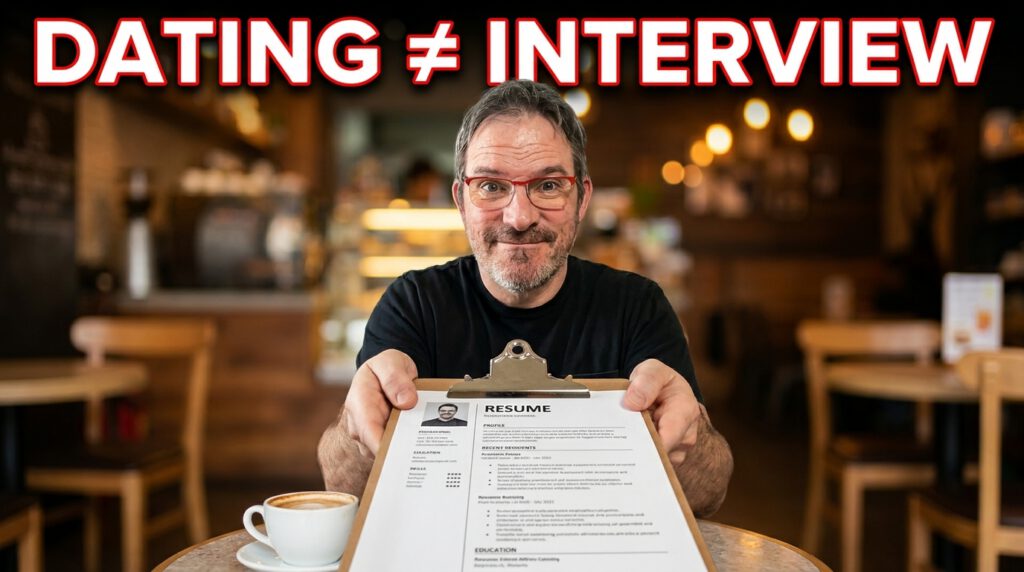
Man depicted at a small cafe table with a cup of coffee, but instead of looking relaxed, wearing an overly stiff nervous inquisitive smile, holding out a literal clipboard with a resume on it toward the camera (as if the viewer is the date).

Dating With a Disability – Part 2 – Why Auditioning Is Keeping You Single

Does dating with a disability feel like a constant cycle of disclosure anxiety and anticipating rejection? Discover why stares are just neurological reflexes, not rejections, and how treating your disability as a neutral fact can unlock the relaxed confidence needed for authentic connection.

Dating With a Disability – Part 2 – Why Auditioning Is Keeping You Single Read More »

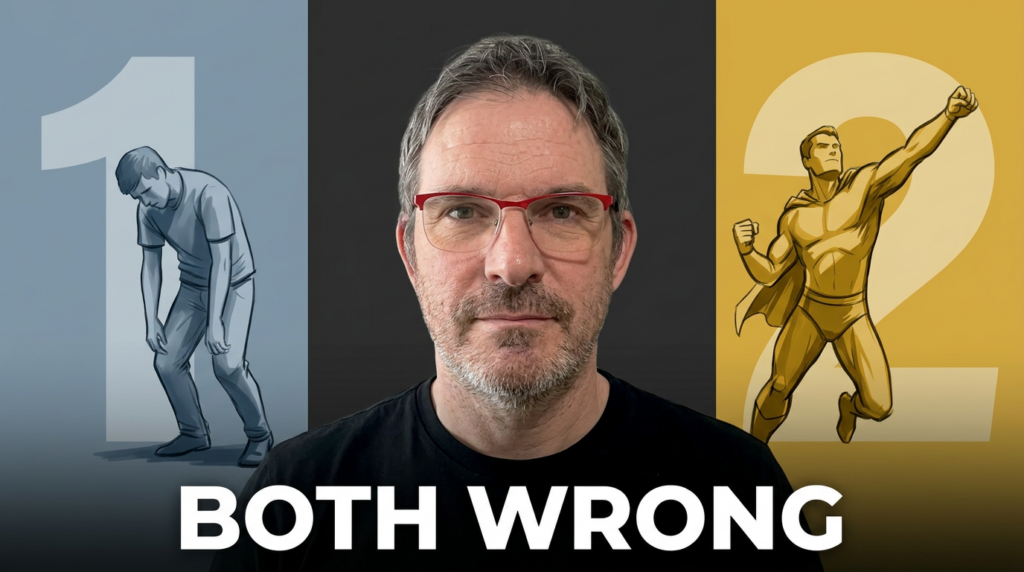
Etienne's face is centered and dominant, flanked by two tinted background figures representing the two disability archetypes — the pitiful charity object on one side and the caped superhero on the other — each in a distinct color column A short bold overlay text says "Both Wrong" and hints at a third, better path without echoing the title.

Don’t Inspire Others With Your Disability (Do This Instead)

You don’t have to inspire anyone.

Society has built exactly two slots for people with disability: the pitiful charity case, and the superhero overcomer who triumphs against all odds. Both archetypes exist to make non-disabled people feel warm and fuzzy – and both place an exhausting, invisible burden on you to perform for an audience that goes back to their lives unchanged.

The pressure to “fight” your disability – the warrior narrative – sets you up to fail a war against your own body. Your body is the only permanent teammate you will ever have. Fighting it leads to burnout, shame, and guilt every time you hit a normal human limitation.

There is a better way. It starts with three shifts: from overcoming to adapting, from inspiring to informing, and from warrior to strategist. These aren’t grand transformations – they’re practical mental moves that put your energy back where it belongs. On your life, not on anyone else’s expectations.

You can quit the inspiration job. Here’s what to do instead.

Don’t Inspire Others With Your Disability (Do This Instead) Read More »

Proof Loop : The 6-week plan

The Proof Loop : How to Build Momentum When You’re Starting Over

The Proof Loop is a three-step framework for rebuilding psychological momentum after disability or chronic illness. When the brain enters survival mode following a major life change, it systematically erases evidence of daily wins while amplifying failures – a pattern that blocks creative energy even after physical stability is achieved. By noticing micro-wins above the daily baseline, labeling them as proof of capability, and storing them in an external log, individuals can override this deficit filter. Neuropsychologist Dr. Rick Hanson’s research indicates that six weeks of consistent practice produces measurable neurological change, reducing stress response activity while increasing engagement in the brain regions governing planning and decision-making.

The Proof Loop : How to Build Momentum When You’re Starting Over Read More »

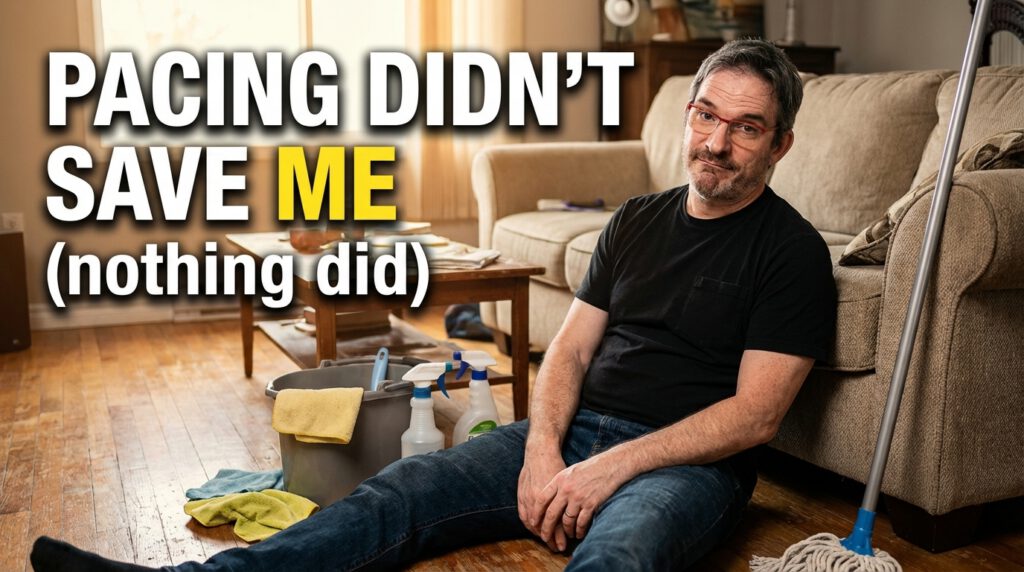
Etienne sitting on the ground with lots of cleaning devices and products around him on the floor. Big text says "Pacing didn't save me, (nothing did!)"

Why “Pacing” Is Failing You (And What To Do Instead)

The advice to “pace yourself” sounds reasonable until you realize it was designed for a body that fully recharges overnight. If yours doesn’t, you’ve been handed a system that guarantees failure – not because you’re doing it wrong, but because the math never added up. There is a different approach. It starts by defining the smallest action that still counts as showing up, before a bad day arrives to derail the plan.

Why “Pacing” Is Failing You (And What To Do Instead) Read More »

Close on Etienne face not smilingon black background. "It's Not Fair" in Big glowing letters, with smaller header saying "You're right. Now what?" under it.

It’s Not Fair I’m Disabled : Why You Deserve To Give Yourself A New Kind of Fair

“It’s not fair” – and you’re right. You shouldn’t have to be disabled. That feeling is completely valid, and this post won’t try to talk you out of it. But when “it’s not fair” becomes the only story you carry, it quietly starts making decisions for you. Here’s a three-part framework for taking back the wheel – not by pretending the unfairness doesn’t exist, but by refusing to let it be the boss of you.

It’s Not Fair I’m Disabled : Why You Deserve To Give Yourself A New Kind of Fair Read More »